When choosing an office removals company, check five things: accreditation and insurance (FIDI, FAIM, ISO, plus goods-in-transit and public liability cover), proven commercial move experience with references, a clear plan to keep you running through out-of-hours or phased moves, proper IT and specialist handling, and an on-site survey that produces a fixed written quote and a risk assessment. Walk away from any firm that quotes without visiting.
An office move is a project, not a van run. If it goes well, your people sit down on Monday and work. If it goes badly, you lose days of productivity, risk damage to IT and furniture, and carry the liability for anything that goes wrong in a shared building. The company you pick is the single biggest factor in which of those you get.
This guide is written for the person who usually ends up running the move: the facility manager, office manager, or EA who's rarely done one before. It covers what to check, what to ignore, and the questions to ask before you sign anything.
Why an office move needs a specialist, not a house-removals firm
Plenty of removal companies will say yes to an office job. Far fewer are set up to run one properly, and the difference shows on move day.
A commercial move has moving parts a domestic one doesn't: business continuity and downtime, IT and server equipment, data protection, building and lift access in shared premises, health and safety documentation, and the sheer scale of a floor or a whole headquarters. A firm that mostly does house moves can carry boxes, but it may not provide a method statement, sequence an IT room, or work around your building's loading-bay booking. Start by filtering for companies that run commercial relocations as a core service, not an occasional extra.
Accreditation and insurance: what to actually check
This is where you separate a professional operation from a man with a van, and it's the part most people skim. Ask for proof of each, in writing.
Accreditation. FIDI accreditation and the FAIM standard are the highest independent quality marks in the moving industry, audited by a third party, and fewer than 600 companies worldwide hold them. ISO 9001 is a general quality-management certification and worth having, but it isn't specific to moving. A firm with FIDI and FAIM has been audited on exactly the processes an office move depends on.
Insurance. Two policies matter. Goods-in-transit insurance covers your equipment and furniture while it's being moved, and public liability insurance covers damage or injury at either premises. Ask for the cover limits, not just confirmation that a policy exists, and check the limit is high enough to cover the real value of your IT and fit-out. A quote that's cheap because the cover is thin is not cheap.
Confidentiality. If your move involves files, records, or any personal data, ask how the company handles confidential material and whether crews are vetted and uniformed. Under GDPR, your organisation stays responsible for personal data while it's in transit, so this is a reasonable thing to pin down.
Commercial experience and project management
Accreditation tells you a firm can move things well. Experience tells you they can run your move specifically.
Ask how many commercial moves they handle a year and at what scale, from a single floor to an entire headquarters. Ask for references from businesses of a similar size to yours, and actually call one. The question that matters is whether the move ran to plan and what happened when something slipped.
The practical marker of a serious operation is a single named point of contact, a move coordinator or project manager who owns your job from survey to the last box. You want one person who knows your building, your deadline, and your IT setup, not a different crew lead each time you call. Years in business is a fair proxy for reliability too, which is why longevity and audited accreditation together tell you more than either on its own.
Can they keep you running? Downtime and out-of-hours moves
Downtime is the real cost of an office move, and it's the thing to interrogate hardest. Every hour your team can't work is money, so ask exactly how the company minimises it.
The good answers involve timing and sequencing. Out-of-hours and weekend moves let the heavy lifting happen while the office is empty, so people arrive to a working desk rather than a pile of crates. Phased moves, taking a floor or a department at a time, keep part of the business running throughout. A crate and labelling system that maps every box and workstation to its destination means setup is fast and nothing goes missing. If a company's only plan is "we'll be quick," keep looking.
IT, specialist items, and decommissioning
The server and comms room is where office moves go wrong, so treat IT as its own question. Ask how the company handles the disconnection, transport, and reconnection of IT and server equipment, and whether that's coordinated with your own IT team or provider. Sequencing matters: the network usually needs to come up first at the new site so everything else can follow.
Beyond IT, check what else they cover: dismantling and reassembling desks and storage, handling specialist items like safes, printers, and lab or medical equipment, and the end-of-tenancy jobs that catch people out. A full-service commercial mover can also help with decommissioning the old space, clearing furniture you're not taking, and arranging secure disposal or shredding of documents and redundant equipment. Confirm which of these a company actually provides rather than assuming, because the list varies a lot between firms.
The site survey and the quote
Here's a simple test that filters out the weak options fast: a company that quotes for an office move without visiting your premises is guessing, and you'll pay for the guess later in day-rate add-ons.
Insist on an on-site survey. A proper surveyor walks both buildings, assesses access, lift sizes, loading bays, and the volume and type of what's moving, and asks about your deadline and your IT. What you should get back is a fixed written quote based on that survey, not a rough estimate, along with a risk assessment and method statement (RAMS) that shows they've thought through the health and safety of the job. The RAMS also tends to be what your own building management or landlord will ask for before they let a move happen. If a firm can't produce one, that tells you something.
Local knowledge
A move in Dublin city is a different job from a move in a business park, and local experience saves you money and headaches.
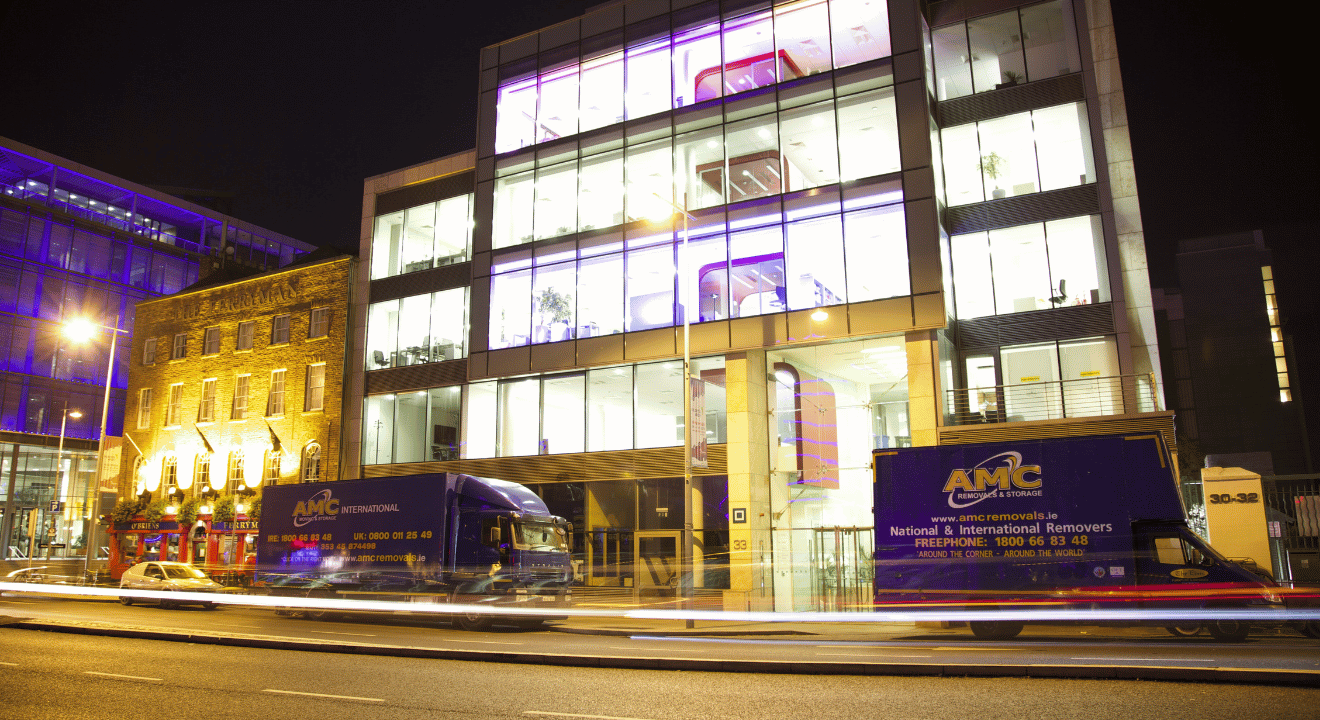
City-centre offices come with real access constraints: limited loading bays, timed parking and delivery windows, service-lift booking, and out-of-hours building access that has to be arranged with management in advance. A mover who knows Dublin plans around these rather than discovering them on the day. For businesses in Kildare and the wider commuter belt, a locally based company is on your doorstep, which keeps costs down and makes site surveys and follow-ups easy to arrange. Ask whether the company has moved offices in your specific area and building type before.
Questions to ask before you hire
Run these past any company on your shortlist. The answers sort the professionals from the rest quickly:
- Are you FIDI-accredited and FAIM-certified, and can you show the certificates?
- What are your goods-in-transit and public liability cover limits?
- How many commercial moves do you handle a year, and can I have two references of my size?
- Who is my single point of contact from survey to completion?
- How do you minimise downtime, and do you work out of hours and weekends?
- How do you handle IT and server disconnection and reconnection?
- Do you provide a written risk assessment and method statement?
- Will you survey both premises in person before quoting?
- Is the quote fixed, and what would make it change?
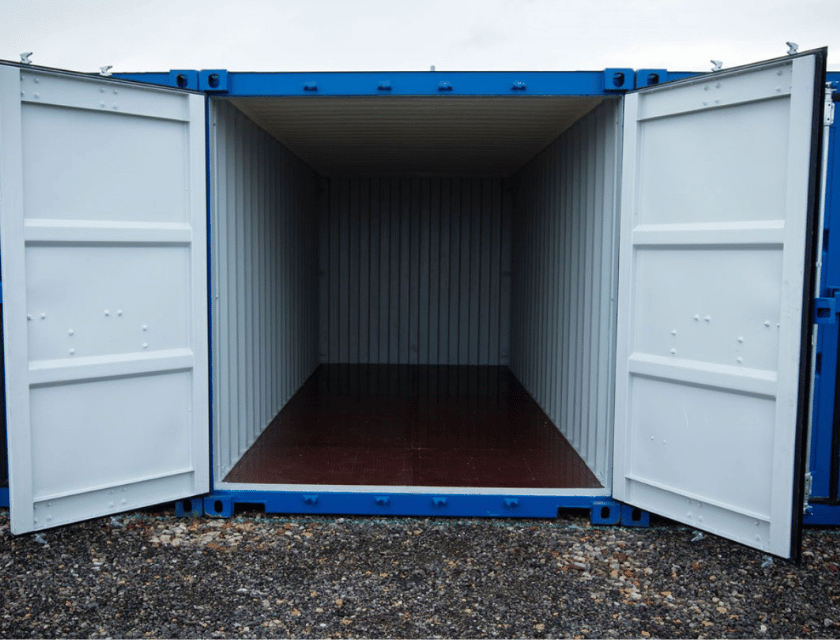
- Do you offer storage if our new space isn't ready on time?
Frequently asked questions
Q.What should I look for in an office removals company?
Accreditation and insurance (FIDI, FAIM, plus goods-in-transit and public liability cover with adequate limits), proven commercial move experience with references, a plan to minimise downtime through out-of-hours or phased moves, proper IT and specialist handling, and an on-site survey that produces a fixed written quote and a risk assessment.
Q.How much does an office move cost in Dublin?
It depends on size, access, timing, and whether you need out-of-hours moving, IT handling, and storage. The only reliable number comes from an on-site survey. Be wary of any fixed price quoted without a visit, as it usually grows on the day.
Q.Should the company survey our office before quoting?
Yes, always. A professional mover surveys both premises in person to assess volume, access, lift sizes, and loading bays, then issues a fixed written quote and a method statement. A sight-unseen estimate is a guess you'll end up paying for.
Q.How do office movers reduce downtime?
Through out-of-hours and weekend moves so the work happens while the office is empty, phased moves that keep part of the business running, and a crate-and-labelling system that makes setup at the new premises fast. Ask for the specific plan, not a promise to be quick.
Q.What's the difference between FIDI/FAIM and ISO 9001?
ISO 9001 is a general quality-management standard. FIDI accreditation and the FAIM standard are specific to the moving industry, independently audited, and held by fewer than 600 companies worldwide. For an office move, FIDI and FAIM speak directly to the processes that matter.
Q.Do office removals companies handle IT and server equipment?
Many do, but not all, so confirm it. A capable commercial mover disconnects, transports, and reconnects IT and server equipment in coordination with your IT team, and sequences the move so the network comes up first at the new site.
Get started
AMC Removals & Storage handles commercial and office relocations across Dublin, Kildare, and the wider Leinster region, with over 25 years of experience. We're FIDI-accredited and FAIM-certified, the highest independent standards in the industry, held by fewer than 600 companies worldwide, and fully insured. Every move starts with an on-site survey and a fixed written quote, and our own storage facility in Naas covers you if your new space isn't ready on time.
Book a free office move survey here. We'll walk both premises, go through your deadline, IT, and access, and send a fixed written quote.